In this guide
Most clients who stop coming never decided to stop. Work got busy, they went away for a month, the habit broke, and now it feels a bit awkward to book again. A short, warm message is often all it takes. A discount in the first line usually isn’t.
Who to message
Not everyone who hasn’t booked lately. Look for regulars who’ve gone quiet for a while.
ClinicSense’s win-back guide suggests clients who haven’t booked in the past three to six months, pulled from the last year of bookings [1]. That range makes sense on the floor. Under a few weeks is just a busy stretch. Past six months, they may have moved on, and that’s fine too.
Leave some people off the list:
- Anyone who told you they were finished. They moved, they’re done, they’ve gone back to their PT. Respect that.
- Clients who often cancelled late or caused problems. The same guide says to take them off the win-back list [1].
- Anyone who was unhappy. They need a real conversation, not a “we miss you.”
A client who keeps missing sessions is a different conversation from one who’s gone quiet; that wording is in late cancels and no-shows.
Miss them before you sell them anything
The first message is about them, not about a deal. People stay with a service partly for the social side of it: being recognized, being known by name [2]. A message that shows you remember them does more than one that shows you have a promotion.
A light first message:
- “Hi Dana, it’s been a while and I was thinking of you. How’s the hip been? Would love to see you back whenever it suits.”
- “Hi Sam, hope the new job’s going well. Your Thursday slot’s still around if you want it.”
Notice what’s missing: no percentage off, no “limited time.” If you do have something to offer, it can come later, in a second message, or not at all.
Use last time’s note
This is where good notes pay for themselves. Before you write, read their last note. What were you working on? What were they training for? What did they mention?
A generic message:
Hi! We haven’t seen you in a while. Book now and get 20% off!
A message written from the note:
Hi Marcus, it’s been a few months. Last time we were working on the right hip for your golf. How’s the game? I’d be glad to pick it back up whenever you’re ready.
The second one could only have been sent to Marcus. That’s the point. It tells him the studio remembers why he came, which is the confidence that brings people back [2].
A few things to pull from the note:
- The goal. “The 10K in the spring.” “Getting down on the floor with the grandkids.”
- Where you left off. “The right hip.” “The left shoulder.”
- One personal thread. The trip, the wedding, the new job.
Leave out anything clinical or sensitive. “How’s the hip?” is fine. “How’s your recovery from the surgery?” in a text may be more than they want on their phone.
One message, then let it be
Send one. If they reply, great. If they don’t, leave it. Some practitioners send a second note a month or two later; some never do. Either way, don’t send a sequence of three in a week. That stops being “we miss you” and starts being a campaign.
Pick the way they’d normally hear from you. Text if you text them, email if you email them. ClinicSense’s guide also mentions a phone call or a card for clients you can’t email [1].
When they come back
Treat the first session back like a returning client, not a new one. Read the brief, ask what’s changed since you last saw them (anything new, any injuries, any surgery), and pick up the goal. “Last time we were on your right hip. Is that still the thing, or has something else come up?”
If they tell you why they stopped, write it down in their words. “Says she stopped when work got busy in the summer.” It’s useful for you, and it’s useful for the next person who sees them.
Then book the next one before they leave. Getting clients to rebook is the habit that keeps them from going quiet again.
Where Dorsova fits
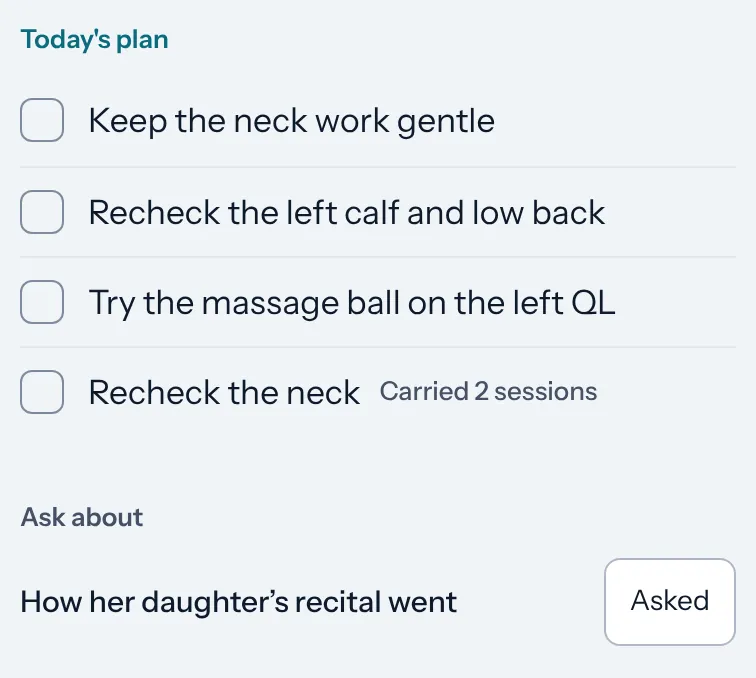
In Dorsova, the Radar on Clients shows who’s Overdue for their usual rhythm and who’s Not back in a while, so you know who to message without scrolling a calendar. Tap a client to see their last session, then open their brief: the goal, where you left off and what to ask about are all there to write from.