In this guide
An assisted stretch session is fifty minutes, maybe twenty-five, and then the client’s off the table and the next one’s in the lobby. Next week the note is the only thing that tells you, or whoever sees them, what you did and what to do next. A stretch note needs a few things a general session note doesn’t: the client’s position for each block, the side every time, and how far you took each stretch.
The four parts
The reader that matters is the practitioner who sees this client next. Maybe that’s you in a week. Maybe it’s someone who’s never met them, on a Saturday.
- How the client came in. What they told you at the start, in their words. “Says hips tight after a week of travel.” If they gave a number for pain or tightness, write it as theirs: “rates the low back 3/10.”
- What you did, in order, with the position. One line per block. “Face up: hamstrings, hips, then a figure-four for the glutes. Face down: quads, calves.”
- How they responded. “Said the right hip let go. Left hamstring still tight at the end.”
- Next time. One or two specific things. “Start with the left hamstring. Ask how the flight home was.”
Four parts, each a line or two. A blank to copy, with a line each for the precaution, the intensity and what you found, is the stretch client note template. (Why it gets written the minute they leave, and how to keep it under a minute, is in how to write session notes fast.)
Write it in order, and turn them over once
This is the habit that changed my notes the most. Write the work like chapters, in order, with the position for each block. Hamstrings, then calves, which led into massage gun work, then upper traps, then active release, then neck work. Face up first, then the turn, then face down. Or seated, then face up.
Two things come out of it. The next practitioner can run the same session, because they see the flow and not only the list. And you see your own flow. If a note reads face up, face down, face up, face down, the client turned over three times when once would have done. That’s janky. So group the work by position:
- Do everything you can in one position before you move on.
- Turn the client over once at most. If you need them face down, start face down and finish face up. Or keep the whole session face up.
- Keep the same flow next time. The note is the plan for whoever sees them next.
This matters most with older clients and clients with injuries. Every turn takes effort, and the end of the session means sitting up and getting off the table. A drop in blood pressure on standing up from sitting or lying down can cause dizziness or lightheadedness [1], and that lightheadedness can lead to falls, especially in older adults [2]. Fewer turns is kinder to them, and it looks more professional.
Always the side, always the area
“Tight hamstrings” is half a finding. Left, right, both, and was one worse? Side is the first detail to disappear from memory and the most useful one next week.
Write what you found the same way every time: side, area, what you found. “Left hamstring tight.” “Right upper trap, knot.” “Both calves tight, left worse.” Keep the words the same from session to session, too. If it’s “tight” this week, don’t make it “restricted” next week, or it’ll look like something changed when only your wording did.
Say how strong the stretch was
Assisted stretching lives on intensity. Write down how far you took it and how the client wanted it, in their words or on whatever scale your studio uses. “Kept the hamstrings light, client wanted a 5.” “Client asked for more on the hips, went to a 7.” The next person then knows where to start, and won’t take a client who likes it gentle straight to a 9.
If you estimate range of motion by eye, write it the same way each time, and remember it’s an estimate by eye, for tracking progress. Not a clinical measurement. Keeping it consistent is covered in tracking a client’s flexibility over time.
Three examples
Made-up clients, written the way you’d want to read them.
A first visit
The intake covers their history (the first session with a new client). The first note covers the session itself.
Note: First visit. Desk job, wants to touch toes again and feel less stiff in the mornings. Reports right ACL repair 2019, says the surgeon cleared it, no limits now. No other injuries. Wants medium intensity. Work: Face up: hamstrings, hips, figure-four for glutes, light work at the right knee. Face down: quads, calves. One turn. Response: Said the hamstrings were the tightest, left more than right. Right hip moved more freely than left. Next: Start face up with the left hamstring. Ask how the mornings feel.
A regular
Nothing new, a good week. This is where notes get lazy (“same as usual, went well”), and it’s where a specific line pays off later.
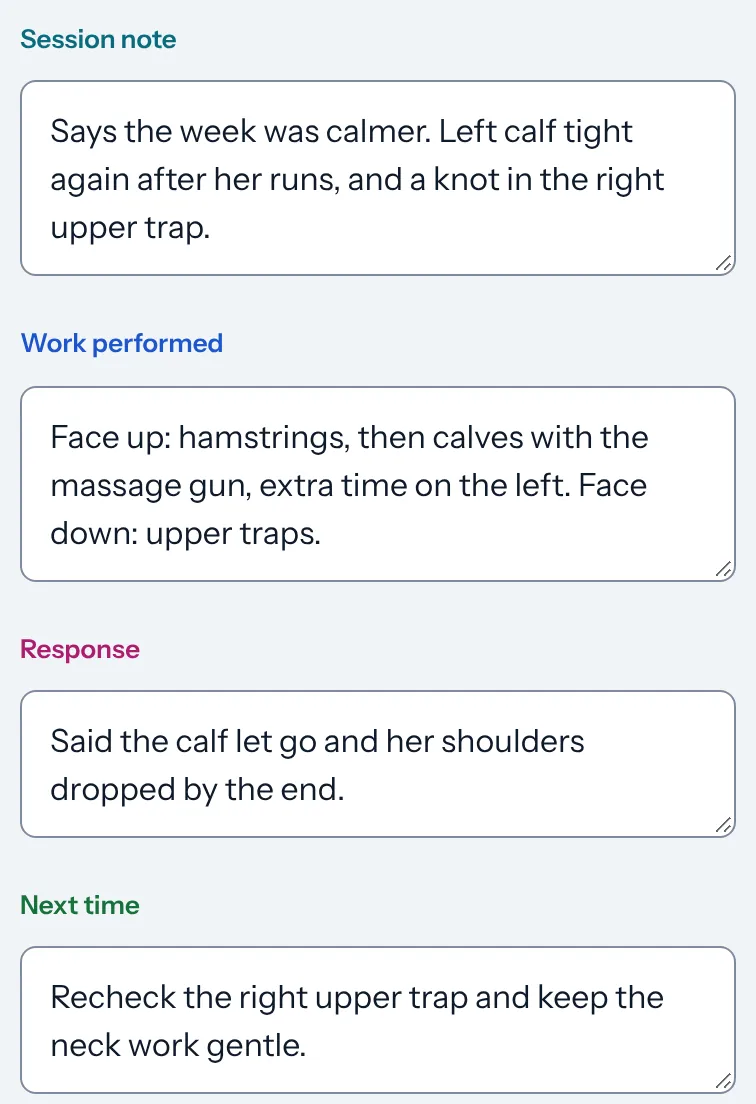
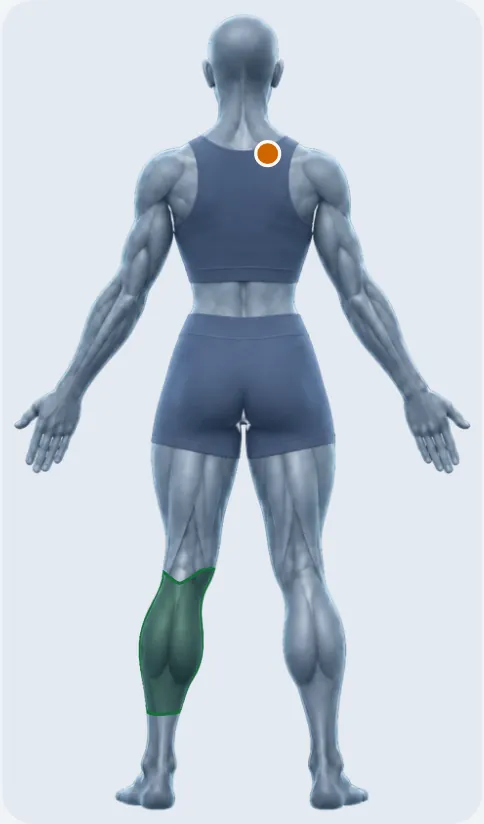
Note: Says the week was calmer. Low back fine. Left calf tight after her runs, 3/10. Work: Face up: hamstrings, then calves with extra time on the left, massage gun on both calves. Face down: upper traps, light. Response: Said the left calf let go by the end. Knot at the right upper trap, eased with pressure. Next: Recheck the right upper trap. Keep the neck work gentle. Ask about the recital.
A client with a fresh tweak
The golf client strained a calf hiking. Work around the calf and keep his goal in the note so the sessions turn back to it (more on the macro goal and the micro issue in how to write session notes fast).
Note: Golf client. Reports strained left calf hiking on Saturday, says it’s sore to walk on, 5/10. Low back fine. Work: Face up: hips, rotation work for the trunk, right calf and both hamstrings. Kept off the left calf completely. No face down today. Response: Said the hips and trunk felt good. Left calf not touched. Next: Ask how the left calf feels. Keep off it until he says walking is easy. Back to rotation work for golf.
None of those took more than a minute to write. Each one would let a stranger run a good next session.
What stays out of a stretch note is the same as any other: diagnoses you didn’t receive, guesses about cause, outcomes you can’t stand behind. “Said it felt looser” is a record. “Fixed her hip” isn’t. The full list is in SOAP notes without the clinical part.
Where Dorsova fits
I built Dorsova so this note takes a minute. After the session you talk it through or type four short boxes (session note, work performed, response, next time). It’s sorted into the note, and marked on the body map when you say the side, the area and what you found. Before the next session, that note becomes a 30-second brief, with their cautions first and last time’s Next time as today’s plan, for whoever they book with.