In this guide
Most SOAP examples you find online were written for a clinic. They have a diagnosis under A, and a massage therapist who copies them ends up writing things that aren’t theirs to write. These five are written for massage: the four letters kept, every line something you can stand behind. Made-up clients, the kind of sessions you’ll actually have.
The American Massage Therapy Association offers a SOAP notes form for keeping track of massage clients’ conditions and progress [1], and ABMP’s magazine makes the case for charting this way too [2]. Your state board sets the actual rules, so if theirs are stricter than anything here, theirs win.
The four letters, in one line each
- S, what the client tells you. In their words. Pain or tightness only as they report it.
- O, what you did and what you saw. Areas, techniques, pressure, position, in the order you did them. Which side was tighter, what moved more freely, what you avoided and why.
- A, how they responded. What they said during and after, and what changed in the session. Not what you think is wrong.
- P, next time. One or two specific things, and anything you suggested they ask their doctor about.
Why the A is the letter to watch, and the words to keep out of any note, are in SOAP notes for non-clinicians.
1. A first visit
Desk job, neck and shoulders. The intake holds their history (what to record at intake); the first note holds the session.
S: First visit. Says neck and shoulders tight after long days at the desk, right side worse, 5/10. Wants medium pressure. No injuries or surgeries reported. Doesn’t want the feet touched. O: 60 minutes. Face down: back, shoulders, upper traps, then neck. Face up: neck, chest, arms. Medium pressure, lighter on the right side of the neck. Right upper trap and levator noticeably tighter than left. Turning the head to the right limited at the start. Feet not worked, at the client’s request. A: Said the neck felt easier turning right by the end, 2/10 when she sat up. Said the right shoulder blade was tender. P: Start face down with the right upper trap. Ask how the desk week went. Keep the feet off the list.
2. A regular, a good week
The note that gets lazy (“same as usual, client happy”). A specific line here is what helps three months from now, when something changes.
S: Says the week was good. Low back fine. Left hip a little tight after a weekend of gardening, 3/10. O: 60 minutes. Face down: back, glutes with extra time on the left, hamstrings. Face up: hips, quads, neck. Medium-firm pressure, as she likes it. Left glute tighter than right. A: Said the left hip let go by the end. Said nothing was tender today. P: Recheck the left glute. Ask how the garden’s coming along.
3. A client who brings a diagnosis
Her doctor has a name for it, and she tells you. It goes in the note as hers and her doctor’s, and the work goes around what she’s been told.
S: Says her doctor called it plantar fasciitis, right foot, a month ago. Says she’s been told to keep up the calf stretches her PT gave her. Right heel sore first thing in the morning, 4/10 today. O: 60 minutes. Face down: back, hamstrings, calves with extra time on the right. Face up: shins, left foot, light work on the right foot away from the heel. Medium pressure, light on the right foot. Right calf tighter than left. A: Said the right calf felt looser. Said the heel was no worse during or after. P: Same plan next time. Ask how the mornings feel, and what her PT says about the foot.
Nothing in that note says what’s wrong with her foot. It says what she reported, as hers.
4. An older client on a blood thinner
Medications go in the note as the client names them, because some change the session. What they take, and when, is between them and their prescriber.
S: Says she started a blood thinner last month, her doctor’s prescription. Bruises more easily lately. Shoulders stiff, 3/10. Wants to keep coming weekly. O: 50 minutes. Side-lying on the left, then face up, no face down today (client prefers it). Light pressure throughout, no deep work. Shoulders, upper back, neck, arms, legs. Small bruise on the right forearm, left alone. Helped her sit up slowly at the end and gave her a minute before standing. A: Said the shoulders felt looser. No new bruising seen. Steady on her feet when she stood. P: Keep the pressure light. Ask about new bruises at the start of each visit. Same positions next time.
More on getting on and off the table, pressure and pace with older clients is in working with older clients.
5. Something new comes up
A client mentions something that isn’t yours to explain. You write down what they said, you don’t guess at it, you leave that area alone, and the plan says what you suggested.
S: Says she’s had tingling in the left hand, on and off, for about two weeks. Neck stiff, 4/10. No new injuries. O: 60 minutes. Face down: back, shoulders, right upper trap. Face up: right side of the neck, right arm, legs. Medium pressure. Left side of the neck, left upper trap and left arm not worked, because of the tingling. A: Said the right side of the neck felt looser. Said the tingling in the left hand was the same as before the session. P: Suggested she ask her doctor about the tingling in her left hand before the next session. Ask what they said. Leave the left neck, left upper trap and left arm alone until she’s seen her doctor.
How to say it so the client isn’t frightened, and how to write the referral down, is in when to refer a client out.
A blank to copy
One paragraph of plain keyboard characters, so it pastes cleanly into a booking software’s notes box:
SOAP note | S: (what they told you, in their words; pain as their number) | O: (minutes; areas in order, with the position; pressure; what you saw; what you avoided and why) | A: (what they said during and after; what changed) | P: (one or two things for next time; anything you suggested they ask their doctor about)
If you’d rather skip the letters, the same information fits in the plain session notes template. Whether a studio needs SOAP software at all is in a SOAP-note app or Dorsova.
Where Dorsova fits
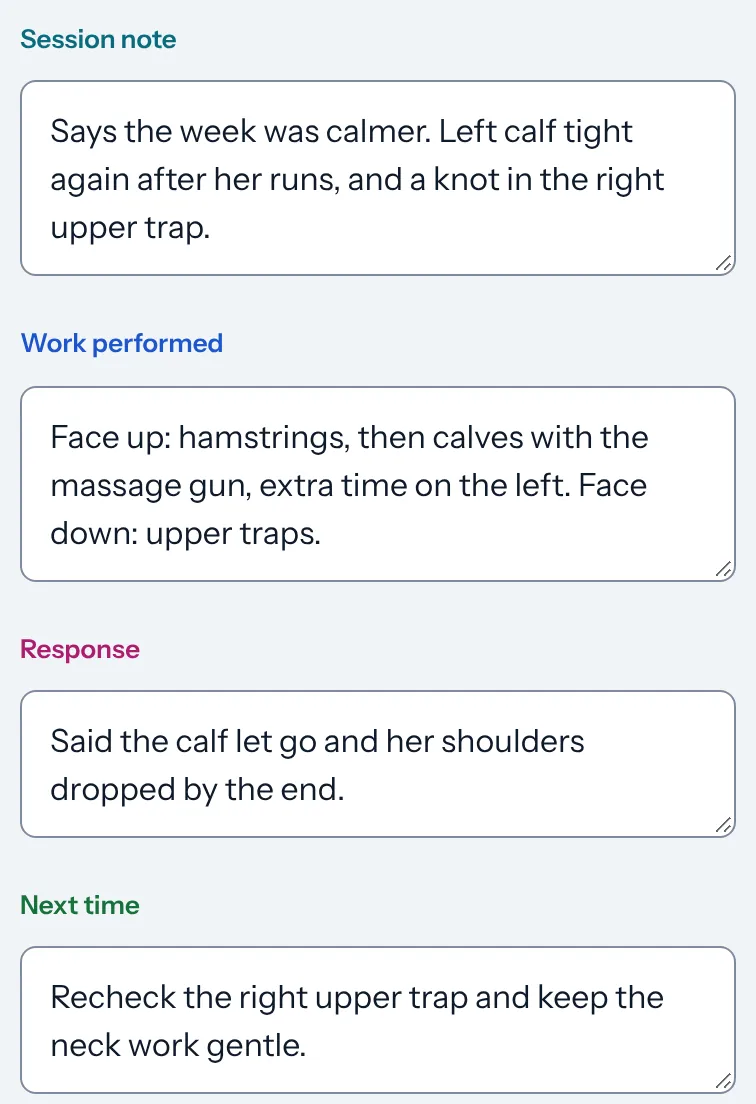
Dorsova’s note is the same four parts with plain names: session note, work performed, response, next time. Talk for a minute or type four short boxes after the session, and Dorsova checks Work performed against the client’s avoid list before you save. When Dorsova AI writes the note from what you said, it only organizes your words. It doesn’t add findings, diagnoses or outcomes, and you read it before you save. Before the next session, the note comes back as a 30-second brief, the client’s cautions first.