In this guide
A lot of trainers track the workout and nothing else. Sets, reps, load, in a spreadsheet or an app. That’s the training log, and it matters. But it doesn’t tell you the client’s knee was grumbling, that you swapped lunges for step-ups because of it, or that they’ve got a wedding in six weeks. The session note does.
The session note is short, it sits beside the log, and it holds the why.
Four parts, a line or two each
- How they came in. What they told you at the start. Sleep, soreness from last time, anything new, anything bothering them, in their words. “Says hamstrings sore for two days after Monday. Slept badly. Left knee fine.”
- What you did, in order. The exercises, sets, reps and load, in the order you did them, and anything you changed and why. “Goblet squat 3x8 at 35 lb. Swapped walking lunges for step-ups, client said the left knee didn’t like the lunges last week.”
- How it went. What they said and what you saw. How hard it felt to them, on whatever scale you use. Form you noticed. “Rated the squats a 7 of 10 effort. Knees drifted in on the last two reps of each set. No knee complaints on the step-ups.”
- Next time. What to start with, what to progress, what to ask. “Keep goblet squat at 35 until the knees stay out on every rep. Ask about the knee after Saturday’s tennis.”
If you keep a separate training log, the note doesn’t need to repeat every set. It needs what the log can’t hold: the why, the how and the what next.
Write down every swap, and why
The most useful line in a trainer’s note is the one explaining a change. When you take something out because of how the client feels, write it down with the reason. Next week, whoever programs their session will know lunges came out on purpose and not by accident.
The same goes the other way. If something on the client’s avoid list showed up in the session on purpose, write why. “Light bodyweight split squat, right side. Client says their PT cleared it on 10/2.” Checking every program against that list, and getting clearance, is its own job: keeping track of client injuries as a trainer.
Keep the client’s goal in the note
The wedding, the ski trip, getting up off the floor without help. Train around the sore shoulder, and keep the goal in the note so the program turns back to it. “Shoulder fine today. Back to pressing next week, six weeks to the wedding.” (More on the macro goal and the micro issue.)
What to keep out
Training sits right next to rehab, and it’s easy to drift. (The full list of clinical words to keep out is in SOAP notes for non-clinicians.)
- Diagnoses. Write what the client reported. “Says knee aches after runs” is yours to write. “Patellar tendinopathy” isn’t, unless that’s what their clinician told them, and then say so. ACE puts diagnosing outside a personal trainer’s scope [1].
- Rehab you’re running. If they’re in PT for something, their PT’s plan comes first and your program fits around it. Write down what the PT said, not your plan for their injury.
- Medical advice. NASM’s handbook says trainers don’t diagnose or treat pain or disease [2]. Pain or a condition that needs looking at goes to a health care professional. Write down that you suggested it.
An example
A made-up client, training for a ski trip:
Came in: Says hamstrings sore for two days after Monday, now fine. Slept badly. Left knee fine. Did: Warm-up 8 min bike. Goblet squat 3x8 at 35 lb. Step-ups to a 16 in box 3x8 each leg (swapped in for walking lunges, left knee didn’t like them last week). Romanian deadlift 3x10 at 2x25 lb. Dead bug 3x10. How it went: Rated the squats a 7 of 10. Knees drifted in on the last two reps of each set. No knee complaints on step-ups. Next: Keep goblet squat at 35 until knees stay out on every rep. Ask about the knee after Saturday’s tennis. Four weeks to the ski trip.
Under a minute to write. The next session starts from it.
A blank to copy, with a first session, a regular and a session built around a sore knee filled in, is in the personal trainer notes template.
Where Dorsova fits
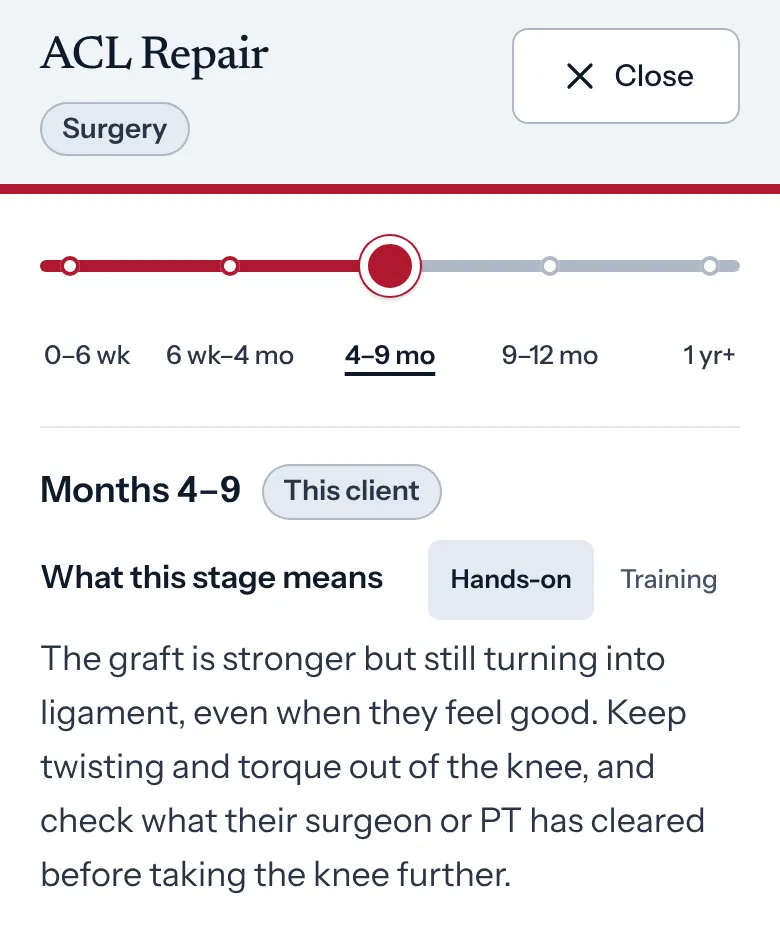
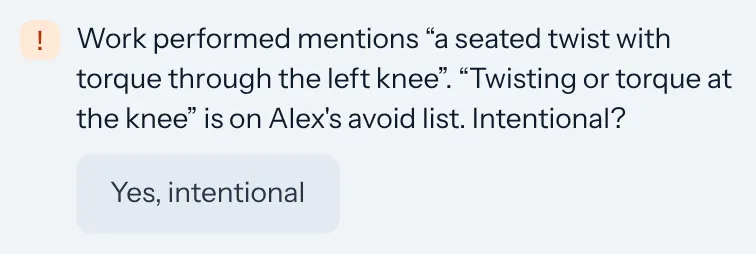
Dorsova keeps each client’s injuries and avoid list in a 30-second brief before the session, with last time’s Next time as today’s plan. Afterwards you talk or type the note in about a minute, and if the work you describe matches something on the avoid list, it asks “Intentional?” before you save. For trainers, the injury library has a Training view of each recovery stage.