In this guide
The intake happens once. After that, everything you know about a client goes out of date a little every week. They start a new class, see their doctor, sleep badly for a month. The check-in at the door is how you catch up, and it takes about a minute if you ask the same few things every time.
The asking is the easy part. The part people skip is putting each answer in the right place, so it isn’t lost by Thursday.
Why every visit
A first session gets the full history: the five-minute consultation. A returning client gets the short version, every time, regulars included. AFPA’s article on client health information makes the point that a client’s health can change between sessions, and recommends checking in regularly, at least once every three months [1]. In a hands-on studio, where someone might be in every week, the door is the natural place to do it.
ABMP’s magazine calls the history the most important part of the evaluation, and notes that clients don’t always know which parts of it matter [2]. That’s why you ask, rather than waiting for them to bring it up.
The questions
Ask them in plain words, in about this order, before they lie down.
- “Anything new since last time? Any new injuries, anything from a doctor or PT?”
- “How did you feel after the last session?”
- “Anything bothering you today? Where, and how much?”
- “Anything you’d like me to stay away from today?”
- Every few months: “Is the main thing still the same?” The goal they came in for.
Five questions, but most visits the answers are short. “No, fine, fine, nothing, yes.” That’s a 20-second check-in, and it’s still worth doing.
Where each answer goes
This is the part that makes the check-in worth anything. An answer that only lives in your head is gone the day you’re off sick.
| Question | Where it goes |
|---|---|
| Anything new? | A new injury or surgery goes on their history, with the side and the date, as they reported it. Anything a doctor or PT said to avoid goes on the avoid list the same day, written as a movement. |
| How did you feel after? | The start of today’s note, in their words. “Says she was sore for a day in the right calf, then fine.” |
| Anything bothering you today? | Today’s note, in their words. Pain is what they report: “Rates low back 4/10 today.” |
| Stay away from anything today? | Today’s work line (“Kept off the left shin: bruise from a fall”). If it’s lasting, the avoid list too. |
| Is the goal the same? | Their goal line, in their words, updated when it changes. |
If nothing’s changed, write that too. “No changes since last session” is information. It tells the next person somebody asked.
A thin note and a good one
A thin check-in note:
All good.
What was good? Was anything asked? The next practitioner can’t tell.
A good one:
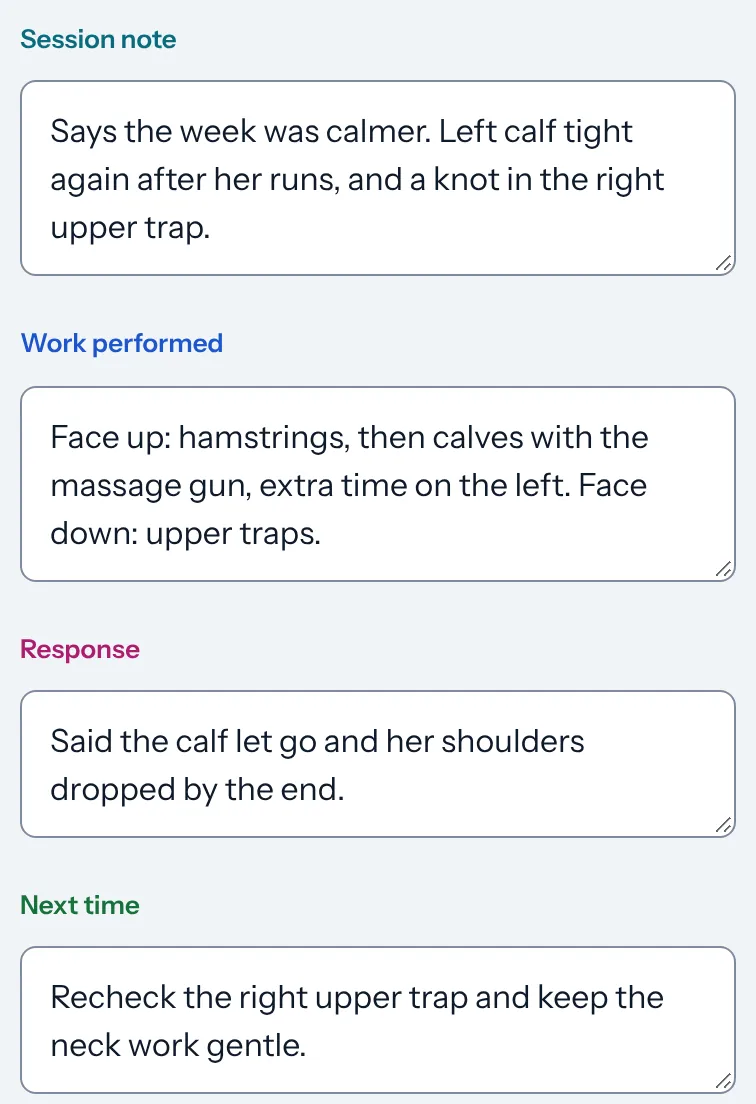
Came in: No new injuries. Says she felt “a bit sore” in the right calf the day after last session, fine since. Low back tight today after gardening, 3/10. Asked to skip the left shin today, bruise from a fall. Next: Ask how the calf was after today.
That’s the whole check-in, written down in under a minute.
When an answer changes the plan
Most days, nothing changes and you go ahead with what last time’s note said. When something does, change the session before you start, not halfway through.
- A new injury, or something they say is worse. Keep away from the area today, work on what you can, and note what you did and didn’t do. If it’s new and they haven’t had it looked at, suggest they check with their doctor or PT first. When to refer out has the wording.
- They felt worse after last time. Ask more, go lighter, and write it in their words. When a client says they felt worse goes through it.
- A surgery since last time. Get what they were told to avoid, and for how long, before anything else.
Make it the same every time
The check-in only works if it’s routine. Same questions, same order, every practitioner in the studio. The client gets used to it, and stops thinking of it as a form. AMTA’s guidance for massage clients is that they can speak up about pressure and comfort at any point [3]. Asking at the door is how you show them you mean it.
Where Dorsova fits
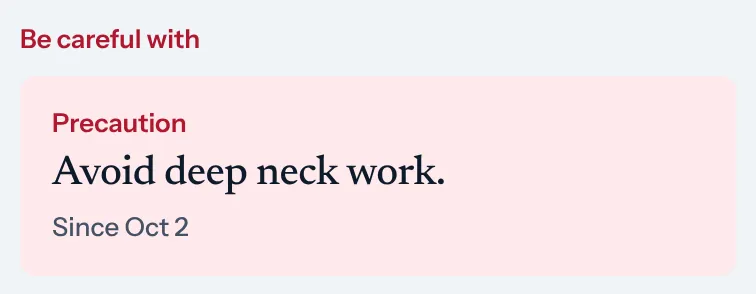
In Dorsova, the answers go where the next brief will show them. Today’s answers go in the note’s Session note box, in the client’s words. A new injury goes on their history with a side and a date, and a new avoid line goes on their list, so both show first in every brief after. Anything to ask next time goes in Next time, and comes back as Plan for today.