In this guide
The intake happens once. The check before the session happens every time, and it’s the one people skip. A regular walks in, you know them, you say hi and get them on the table. Then halfway through you remember the shoulder they mentioned two weeks ago, or you find out someone else saw them on Tuesday and changed something.
The check takes about thirty seconds to read and another thirty at the door.
Read it in this order
Order matters. If you only get through the first item before the client’s in the room, it has to be the one that keeps them safe.
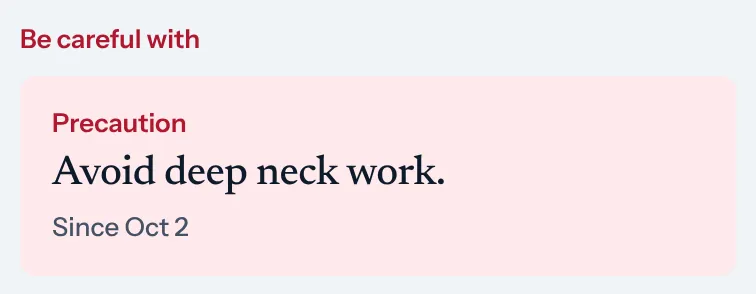
- Cautions. Injuries, surgeries and the avoid lines, with how recent they are. Has anyone asked about clearance? A surgery from this year? Know where they are with it before you touch them.
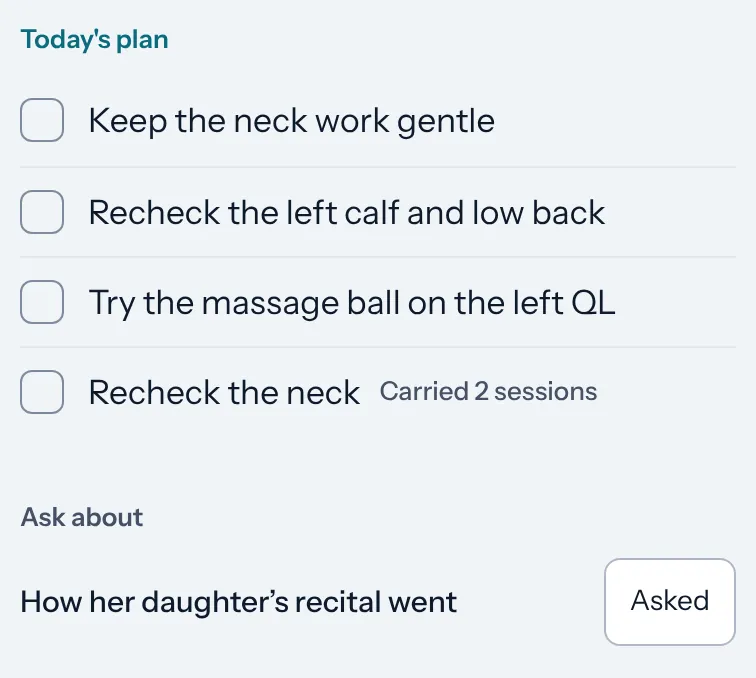
- What last time’s note said to do. The Next time line. “Start with the left hamstring.” “Recheck the right upper trap.” That’s the plan for the first ten minutes.
- What to ask about. Anything the last note said to follow up on, including the personal things. The recital, the trip, the new job.
- Where they were tight last time. The side and the area, so you’re not starting from zero.
- Why they come. Their goal, in their words. The micro issue of the week matters, but get the macro goal in your head before you start.
Read it even for regulars. Somebody else may have seen them since you did, and the note they wrote is the only way you’ll know.
With forty clients, nobody holds this in their head. How to remember every client’s details is the 60-second routine for walking in knowing their injuries, last time and one personal thing.
Then ask at the door
The record tells you what was true last time. The client tells you what’s true today. Ask the same few things, in plain words, before they lie down:
- “Anything new since last time? Any new injuries, anything from a doctor or PT?”
- “How did you feel after last session?” Sore the next day, fine, a headache that evening. Write the answer down.
- “Anything bothering you today?” Where, and how much, in their words.
- “Anything you want me to stay away from today?” A bruise, a sunburn, a spot that’s tender.
If they mention a new medication, write it down the way they name it. Some change how you work, like lighter pressure for someone who bruises easily. What they take and when is between them and their doctor, and that’s where any question about it goes.
AMTA’s guidance for massage clients is that they have the right to agree to the techniques used, pressure included, and that they should speak up whenever they’re uncomfortable [1]. Hold every hands-on session to that. Asking at the door is the start of it. Keep checking in once you’re going.
When the answer changes the plan
Most days nothing’s changed and the plan from last time stands. When something has, change the session before it starts, not halfway through.
- A new injury or something that’s worse. Keep away from that area today, work on what you can, and note it. If it’s new and they haven’t had it looked at, suggest they check with their doctor or PT before you work on it. (When to refer out has the words.)
- A surgery since last time. Get what they were told to avoid and for how long, in their words, before anything else. The after-surgery checklist has the questions.
- They felt rough after last time. Lighter today, and write down what you changed so the next practitioner sees it.
Turn them over only once
Decide the order before they lie down. Everything face up, then one turn, then everything face down. Or the other way round. Unplanned, it ends up three turns, which is janky for anyone and hard work for an older client or someone with an injury. (Why the order matters.)
For clients in their 60s and up, the one-turn plan matters most; dizziness on standing, skin and pressure are in working with older clients.
Write down what you found out
Whatever they told you at the door goes in the note afterwards. “No changes” is fine when it’s true, but write it, because “no changes” is information too. A new injury goes on their history with the side and the date. A new avoid line goes on their list the same day. If you only remember it, it’s gone the day you’re off sick.
ABMP’s magazine calls the client’s history the most important part of the evaluation, and points out that clients don’t always know which parts of their history matter [2]. That doesn’t stop after the first visit.
Where Dorsova fits
Dorsova’s brief is this check, in this order. Tap the client on Today and it shows Avoid first (injuries, cautions, avoid lines and the clearance answer), then Plan for today from last time’s Next time, with what to Ask about underneath, then last time and Why they’re here. You read it in about 30 seconds, one card at a time or all on one page, and tap Asked once you’ve asked.