In this guide
A massage intake form has one job: tell you, before you touch the client, what changes the session. Most forms either ask too little (name, phone, “any injuries?”) or ask forty tick-box questions nobody can do anything with. Here’s a form that fits on one page, question by question, with why each one is there.
The stretch version is the stretch client intake form. The conversation that goes with the form, before the first session, is in the first session with a new client.
The questions
Why they’re here
- What would you like from today’s massage? Open, in their words. “Neck and shoulders after desk work.” “Just want to relax.” Both are real goals, and they’re different sessions.
- Is anything bothering you right now? Where, and how much, as they’d put it. Pain is what the client reports, so the form just gives them room to say it.
Injuries and surgeries
- Any injuries or surgeries, ever? For each: what it was, which side, and when. Month and year if they know. An injury five years ago and one five weeks ago are different sessions.
- Is anyone treating you for anything right now? A doctor, a physical therapist, a chiropractor. Ask who, and for what.
- Has anyone told you to avoid anything? In their words, with how long for if they know.
ABMP’s code of ethics asks its members to take a thorough health history from every client and use it to rule out work or adapt the session [1]. These three questions are the core of that.
Health
- Any conditions you’d like me to know about? Leave space to write. Then ask a few by name, because people don’t think to mention them: high or low blood pressure, diabetes, a blood clot ever, varicose veins, osteoporosis, pregnancy, numbness or tingling anywhere.
- What medications do you take? As they name them, aspirin and supplements included. Some change how you work, like lighter pressure for a client on a blood thinner. What they take and when is between them and their prescriber; the form only records it.
- Any skin conditions, allergies or sensitivities? Rashes, recent sunburn, allergies to oils, nut oils or scents.
AMTA’s guidance on client intake lists much the same minimum: surgeries, medical conditions, current medications, injuries, pain, skin conditions, allergies and sensitive areas [2].
How they like it
- What pressure do you like? Light, medium, firm. Still ask during the session, because “firm” means very different things to different people. How to write it down so it stays useful is in pressure and comfort preferences.
- Anywhere you’d rather I didn’t work? Feet, face, abdomen, glutes, anywhere. No reason needed, and none asked.
- Anything that’s made a massage go badly before? One honest line here saves a lot.
AMTA’s guidance for clients says they can agree to the techniques and pressure used, and ask for changes at any point in the session [3]. Putting the question on the form tells the client you mean it.
What to leave off
- Anything you won’t use. Every extra question is one more reason not to finish the form.
- Medical tick boxes you can’t interpret. A page of ticked conditions with no plan behind it doesn’t help anyone. Ask open, ask the few by name, and when an answer is outside what you know, ask the client to check with their doctor before you work that area. How to say that without scaring anyone is in when to refer a client out.
- Questions that sound like a diagnosis. “Do you have sciatica?” invites a guess. “Any pain or tingling down the leg?” gets what they actually feel.
Then get it into the record
A form in a drawer helps nobody. Before the first session ends, the answers go into the client’s record, in their words: why they’re here, each injury and surgery with the side and when (recording a client’s injury history), what they’ve been told to avoid, written as movements (writing avoid lists), their pressure, and the areas not to touch.
Then ask again. People remember things later, and things change: a new medication, a fall, a pregnancy. Ask what’s new before every session and update the record that day. The few questions to ask at the door, and where each answer goes, are in the check-in for returning clients.
Common questions
What should a massage intake form include?
Why the client is here, every injury and surgery with the side and when, who is treating them now and what they’ve been told to avoid, their health conditions and medications as they name them, skin conditions and allergies, their pressure preference, and any areas they don’t want worked.
Should a massage therapist ask about medications?
Yes, and write them down as the client names them. Some medications change the session, such as lighter pressure for a client on a blood thinner. Whether they take it, and when, stays between the client and their prescriber.
How often should a client update their intake form?
The full form once, then a quick check before every session: anything new since last time, how they felt after the last massage, and anything to avoid today. Update the record the same day.
Where Dorsova fits
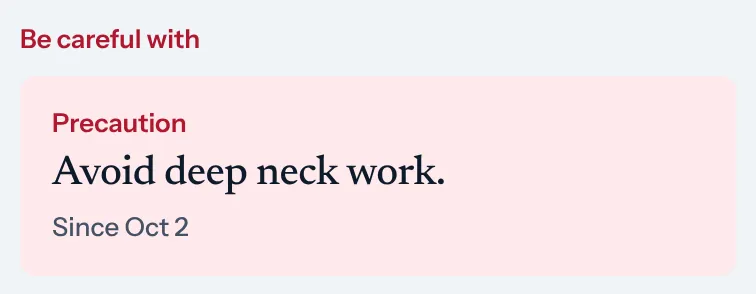
In Dorsova the answers become the client’s record. You add each injury or surgery by picking it from a library of 104 researched injuries and surgeries, or by typing it as the client said it, with when it was. It suggests avoid lines and a caution level for that stage, and your recommendation decides. Every brief shows them first, then last time’s plan and what to ask about, to whoever the client books with.